Operations & Workflow
How systems create scalable and consistent operations
How systems create scalable and consistent operations
Date
Olivia Harris
Olivia Harris
Operations Manager
Structured follow-ups create consistent momentum
Follow-ups are not just reminders—they are the mechanism that keeps deals alive. When follow-ups are structured, every interaction has a clear purpose and timing. Instead of relying on memory or urgency, teams operate with a consistent rhythm that moves deals forward step by step.
This consistency builds momentum. Prospects stay engaged, conversations remain active, and opportunities don’t fade due to inactivity. With a defined follow-up structure, progress becomes predictable rather than dependent on chance.
Timing and context make every message relevant
Effective follow-ups are not about sending more messages—they’re about sending the right message at the right time. A structured approach ensures that each follow-up is tied to a specific stage, action, or outcome within the deal.
When timing and context align, communication feels natural and helpful. Prospects receive relevant updates, reminders, or next steps exactly when they need them. This reduces friction and keeps the decision-making process moving smoothly.
Visibility keeps teams aligned and accountable
When follow-ups are tracked within a system, everyone on the team can see what’s happening and what’s next. This shared visibility removes guesswork and ensures that no opportunity is overlooked or duplicated.
Clear ownership also improves accountability. Each follow-up has a defined owner and status, making it easier to maintain consistency across the entire pipeline. Teams stay aligned, and progress is easier to manage at scale.
Systems turn follow-ups into a growth engine
The most effective sales teams treat follow-ups as part of a system, not a personal habit. Workflows, reminders, and timelines ensure that every deal progresses with clarity and structure.
When follow-ups are embedded into the process, they stop being reactive tasks and become a reliable driver of growth. Deals move forward with confidence, pipelines become more stable, and teams can focus on closing instead of chasing.
Structured follow-ups create consistent momentum
Follow-ups are not just reminders—they are the mechanism that keeps deals alive. When follow-ups are structured, every interaction has a clear purpose and timing. Instead of relying on memory or urgency, teams operate with a consistent rhythm that moves deals forward step by step.
This consistency builds momentum. Prospects stay engaged, conversations remain active, and opportunities don’t fade due to inactivity. With a defined follow-up structure, progress becomes predictable rather than dependent on chance.
Timing and context make every message relevant
Effective follow-ups are not about sending more messages—they’re about sending the right message at the right time. A structured approach ensures that each follow-up is tied to a specific stage, action, or outcome within the deal.
When timing and context align, communication feels natural and helpful. Prospects receive relevant updates, reminders, or next steps exactly when they need them. This reduces friction and keeps the decision-making process moving smoothly.
Visibility keeps teams aligned and accountable
When follow-ups are tracked within a system, everyone on the team can see what’s happening and what’s next. This shared visibility removes guesswork and ensures that no opportunity is overlooked or duplicated.
Clear ownership also improves accountability. Each follow-up has a defined owner and status, making it easier to maintain consistency across the entire pipeline. Teams stay aligned, and progress is easier to manage at scale.
Systems turn follow-ups into a growth engine
The most effective sales teams treat follow-ups as part of a system, not a personal habit. Workflows, reminders, and timelines ensure that every deal progresses with clarity and structure.
When follow-ups are embedded into the process, they stop being reactive tasks and become a reliable driver of growth. Deals move forward with confidence, pipelines become more stable, and teams can focus on closing instead of chasing.
More Articles
How transparent payments improve cash flow clarity
Olivia Harris
How visibility builds client trust in every project
Sophia Bennett
How clear workflows keep projects on track
Sophia Bennett

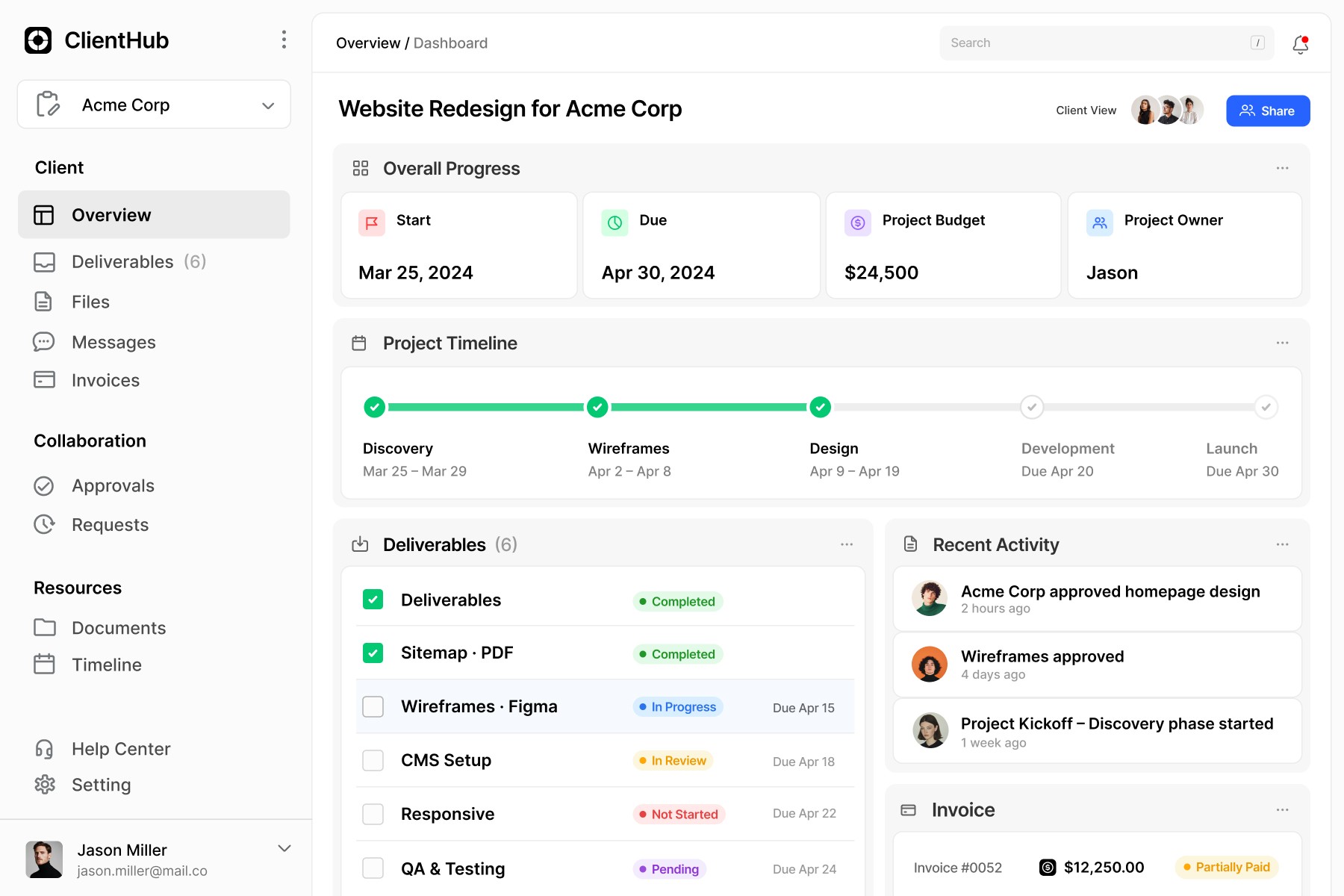
Bring clarity to every client interaction
Manage projects, approvals, and payments in one structured system

Bring clarity to every client interaction
Manage projects, approvals, and payments in one structured system
Bring clarity to every client interaction
Manage projects, approvals, and payments in one structured system